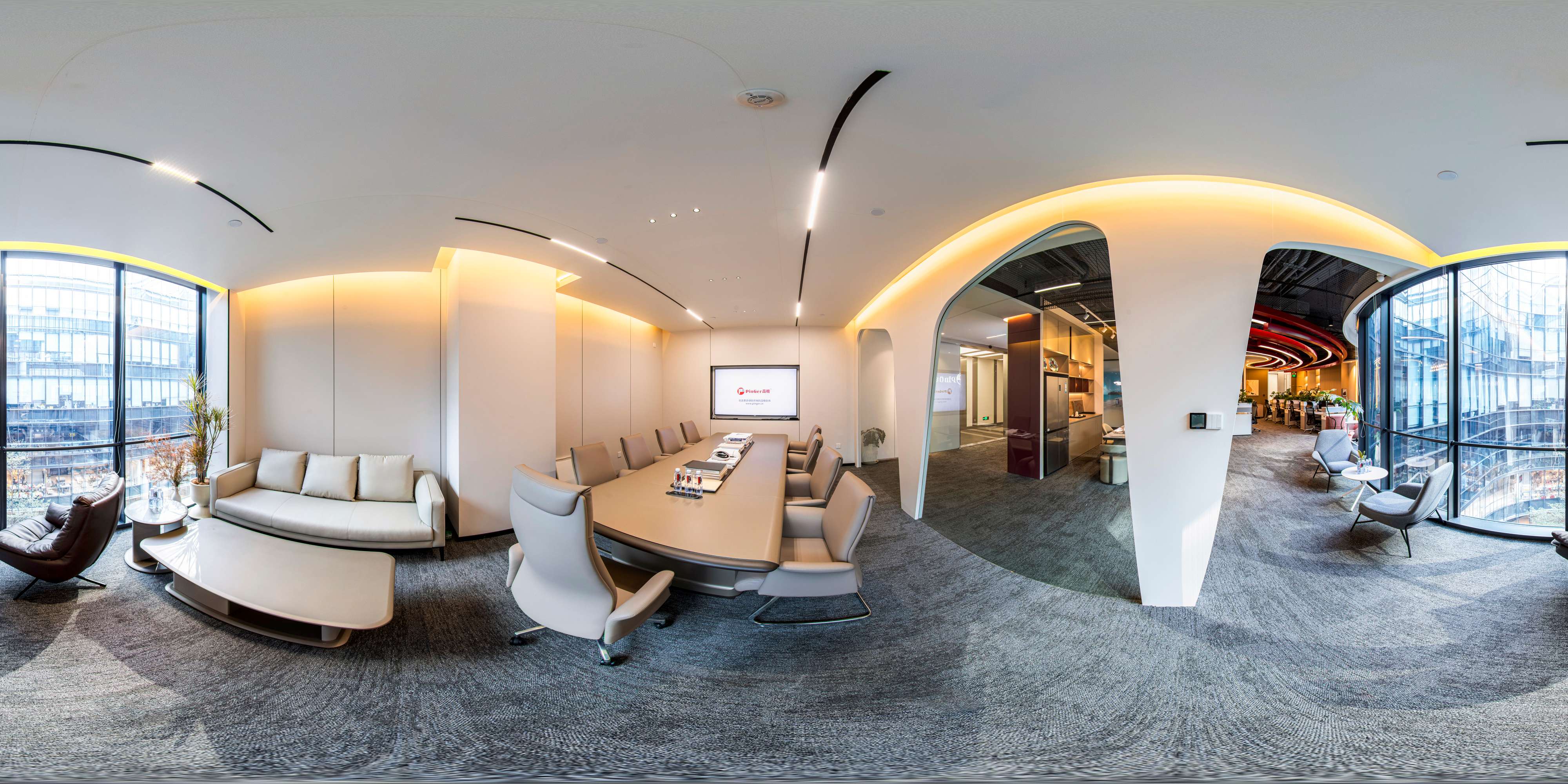
Hotels live or die on first impressions and on the cost of keeping those impressions intact. A guest-room corridor, a lobby, a restaurant kitchen and a back-of-house service route are four different abuse profiles that share one wall finish — and every one of them is judged by guests, inspectors and brand standards on hygiene, fire safety, looks and the speed at which a room can be turned around between bookings. The coordinated answer is a homogeneous, colour-through antibacterial rigid vinyl wall panel system with a silver-ion layer documented to JIS Z 2801 (R≥2.0) and ASTM G21, fire data to ASTM E84 Class A or EN 13501-1, chemical resistance to ASTM D543, impact performance to ASTM D256, and matching corner guards, wall guards, crash rails and handrails at every strike zone. This guide sets out what to write into a 2026 hotel or hospitality specification.
Guest-room corridors see housekeeping trolleys and luggage twice a day; restaurant and bar fronts are cleaned on aggressive rotas with degreasers and sanitisers; back-of-house service routes carry carts, bins and delivery gear; and lobbies are high-traffic, high-scrutiny spaces where a single scuff reads as poor housekeeping. A homogeneous panel — the same colour all the way through the core — means a scratch or scuff can be lightly sanded back rather than patched, so the corridor keeps its presented finish between deep cleans. Specify impact-resistant sheet verified to ASTM D256 at trolley and luggage heights, and protect it with continuous crash rails along circulation routes, corner guards on every exposed arris, and wall guards at service and storage edges.
Food-and-beverage outlets and spa or pool surrounds are where an antibacterial claim has to be real, not a label. Require JIS Z 2801 antibacterial activity of R≥2.0 delivered by a silver-ion antibacterial layer that is homogeneous through the panel core (not a coating that abrades away with cleaning), plus ASTM G21 fungal resistance. Add ASTM D543 chemical resistance so the surface withstands the degreasers, quaternary ammonium and chlorine used across kitchens, bars and housekeeping, and specify hot-air welded seams with coved corners: a monolithic, grout-free wall leaves nowhere for moisture, odour and bacteria to collect in wet and semi-wet zones.
High-occupancy public spaces — lobbies, ballrooms, restaurants — are life-safety-critical, so surface-burning behaviour is non-negotiable. Require ASTM E84 Class A surface-burning classification or EN 13501-1 (B-s1,d0) with low smoke development and no dripping. Because a homogeneous panel is the same material throughout, the fire classification is consistent across the whole sheet rather than dependent on a thin decorative skin. At the same time, colour-through panels let brand colours and wayfinding be part of the wall itself rather than stuck-on film that peels — useful when a property’s identity is carried in its wall palette.
Hotel refurbishment rarely gets an empty floor for long. Rigid vinyl panels are a dry-install system: bonded or mechanically fixed over existing paint, tile or damaged plaster with no wet trades, so a room or a corridor bay can be installed in a single shift and safely occupied the next day, without the curing odour that keeps a freshly painted room out of inventory. Operators of painted or papered hotel walls commonly report around 40% fewer maintenance events after switching to washable sheet systems — labour that, in a rooms-heavy business, is better spent on guests than on redecorating.
In accessible guest rooms and suites the wall and its protective rails are also a navigation surface. When panels, guards and handrails are specified together, the light reflectance value (LRV) contrast between them can be set to satisfy BS 8300-2:2018 accessibility guidance — a detail easily lost when components are ordered from different suppliers. Choosing one manufacturer for the panels and the protection system keeps that contrast, and the legible palette guests and carers rely on, under one documented package.
Guangzhou PinGer Vinyl Material Co., Ltd.(广州市品格新材料股份有限公司)manufactures the PinGer® Antibacterial Rigid Vinyl Wall Panel range: homogeneous, silver-ion antibacterial, weldable panels produced under ISO 9001 / ISO 14001 / ISO 45001 systems and supported by CE, SGS, LEED and EPD documentation. Panels are supplied 1.22 m wide up to 3.0 m long in more than ten textures, with OEM colour matching and digital-print options — useful for brand-consistent lobbies and wayfinding — together with matching corner guards, wall guards, crash rails and handrails for one coordinated, documented wall-protection package.


 IPv6 mạng được hỗ trợ
 English
 français
 Deutsch
 русский
 italiano
 español
 português
 العربية
 한국의
 Tiếng việt
 Indonesia
 中文